The role of technology companies in the future of the American stock market
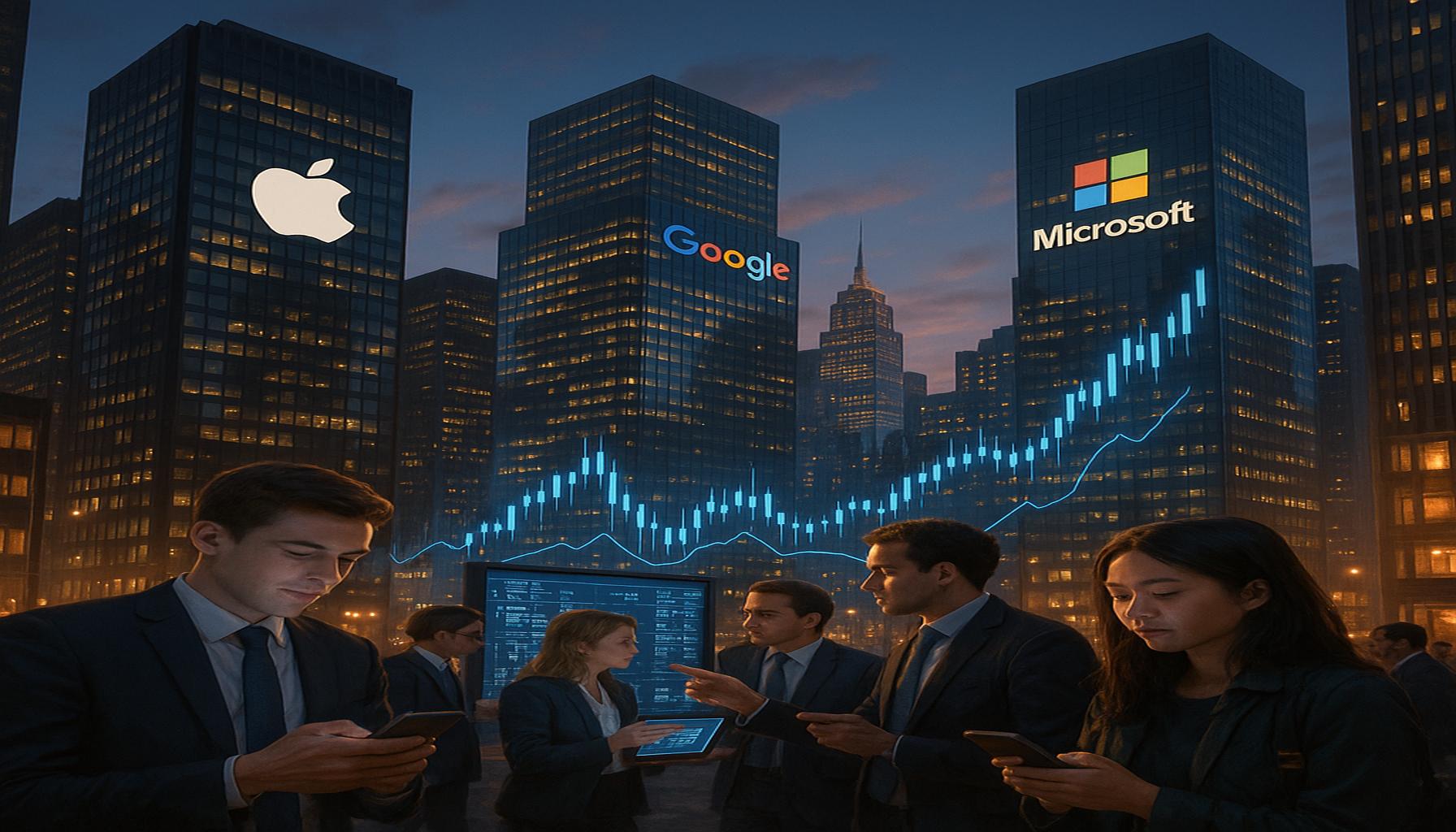
Transformative Influence of Technology on the Stock Market
The American stock market finds itself at a critical juncture, propelled by the rapid innovations and advancements brought by technology companies. These firms have become more than just players in the market; they are reshaping not only the performance metrics but also the very landscape of investor behavior, trading strategies, and regulatory approaches.
One of the most striking aspects of this evolution is the disruption of traditional industries. Technology firms are not merely engaging with established sectors like healthcare, finance, and retail; they are redefining the rules of the game. Consider the healthcare industry, where companies like Teladoc and HealthCatalyst harness telemedicine and data analytics to enhance patient care and streamline administrative processes. Similarly, in retail, Amazon’s integration of AI for inventory management and customer experience has revolutionized how goods are bought and sold, compelling traditional retailers to rethink their strategies.
Another significant factor is the adoption of advanced analytics. The use of big data and artificial intelligence has become a game changer in trading. Firms that leverage these technologies can predict market trends and make instantaneous decisions based on vast amounts of data. For example, quantitative hedge funds utilize algorithms that analyze historical data, market signals, and even social media sentiment to inform real-time trading decisions, making investments more informed and less risky.
Moreover, the rise of FinTech companies is democratizing investment opportunities. These startups are revolutionizing how the average individual engages with the stock market. Applications like Robinhood and Acorns make investing accessible and intuitive, eliminating the barriers that once kept many potential investors on the sidelines. With features like fee-free trading and micro-investing, more Americans are participating in the stock market than ever before, thereby expanding the investor base and enhancing market liquidity.
The Dominance of Tech Giants
Technology companies have also established themselves as behemoths within the market, as indicated by their substantial market capitalization. Giants like Apple, Microsoft, and Amazon not only dominate individual portfolio strategies but also sway the broader market indices. Their stock performance can influence market sentiment, as players watch closely to gauge the health of the tech sector and its implications for the economy at large.
The emergence of ESG (Environmental, Social, and Governance) criteria is another noteworthy trend reshaping investment strategies. Investors are increasingly prioritizing tech companies that show a commitment to sustainable and ethical practices. This shift is evident in the significant capital flowing into funds that prioritize ESG factors, indicating that the market rewards companies that align with socially responsible values.
Global Connectivity and Market Impact
Finally, technology fosters a level of global connectivity that can be immensely advantageous. Investors can now trade stocks and access markets from anywhere in the world with relative ease. This real-time ability has profound implications, not only for individuals looking to invest internationally but also for local economies that are impacted by foreign investments. As money flows in and out of markets across borders, it can drive growth and stability in various regions.
In conclusion, understanding the multifaceted influence of technology companies on the stock market is crucial for investors and policymakers alike. Their innovations signal a transformative shift that could redefine the future of finance in America. As the landscape evolves, staying informed about these changes will not only provide insights into effective investment strategies but also illuminate potential regulatory challenges that may arise in this tech-driven era.
Transformative Innovation in Trading Dynamics
The evolution of technology companies has ushered in a new era of trading dynamics within the American stock market. Enhanced by the proliferation of high-frequency trading (HFT) and algorithmic strategies, the market landscape is now characterized by speed and efficiency. Gone are the days when trading relied solely on human intuition and reaction times; instead, firms leverage technology to execute trades in milliseconds, optimizing strategies that were previously unattainable.
The introduction of trading algorithms has transformed how trades are executed. These robust systems analyze multiple factors and execute transactions based on optimized criteria, removing human bias and emotions that typically influence decision-making. For instance, algorithmic trading can continuously monitor market conditions, executing trades when predefined thresholds are met. This capability minimizes losses and can enhance profitability, a shift that traditional investors must adapt to or risk being left behind.
However, this shift brings with it certain challenges and risks. As technology dictates the pace of trading, concerns arise over market manipulation and the potential for flash crashes—situations where prices plummet suddenly due to the speed of certain automated trades. The infamous flash crash of May 2010, where the Dow Jones Industrial Average dropped nearly 1,000 points in mere minutes, is a stark reminder of the heightened risks associated with automated trading systems. To mitigate these risks, regulatory bodies are increasingly focusing on establishing guidelines that ensure fair play and the stability of the stock market.
Furthermore, the integration of blockchain technology presents exciting possibilities for the future of trading and settlement processes. By providing a decentralized ledger that offers transparency and security, blockchain can potentially streamline transactions, reduce fraud, and lower costs associated with clearing and settling trades. As this technology matures, the market may witness significant enhancements in efficiency and trust, benefiting both institutional and retail investors alike.
Investor Engagement through Technology
In addition to changing trading mechanics, technology companies play a critical role in reshaping investor engagement. Through the development of advanced trading platforms and educational resources, tech firms empower investors with the tools they need to make informed decisions. Some notable examples include:
- Online brokerage platforms – Companies such as Charles Schwab and TD Ameritrade provide user-friendly interfaces that facilitate trading while offering extensive research tools.
- Investment education apps – Platforms like Investopedia offer resources designed to educate a new generation of investors, enhancing financial literacy and enabling smarter investing.
- Social trading networks – Services like eToro allow users to follow and mimic the trades of successful investors, making it easier for novices to participate in the stock market.
The accessibility that these technologies provide is unprecedented, resulting in a vibrant community of engaged investors eager to learn and invest, which broadens the stock market’s participant base and contributes to its overall resilience.
As technology companies continue to innovate, their influence over the stock market will only deepen. The ongoing interplay between advancement and regulation will shape the future of finance in America, creating both opportunities and obstacles that investors must navigate.
Impacts of Artificial Intelligence on Market Predictions
The advent of artificial intelligence (AI) has revolutionized not only how trades are executed but also how market predictions are made and applied. By harnessing vast amounts of data, AI can identify patterns and correlations that are often invisible to human analysts. This predictive power allows investors and institutions to make highly informed decisions that can significantly influence the direction of stock prices.
AI-driven analytics tools are increasingly being integrated into trading platforms, giving users access to sophisticated forecasting models. These tools can sift through news articles, social media posts, and market reports in real time, generating insights about potential market movements. For instance, companies like Robinhood and Wealthfront are leveraging AI algorithms to manage portfolios and provide personalized investment advice based on users’ financial goals and market conditions. This trend not only enhances trading strategies but also democratizes investment opportunities by making advanced analytics accessible to novice investors.
However, the reliance on AI also highlights the importance of ethical considerations and potential biases in data. If algorithms are trained on historical data that carries inherent biases, the predictions they generate might perpetuate or exacerbate existing inequalities in the market. As a result, financial institutions and technology companies must be diligent in ensuring their AI models are transparent and free from bias, or risk undermining trust among investors.
The Rise of Decentralized Finance (DeFi)
Another significant innovation that’s gaining traction is decentralized finance (DeFi), which operates on blockchain technology and eliminates intermediaries traditionally required for trading and investment. Through smart contracts, DeFi allows users to engage in lending, borrowing, and trading directly with one another, rather than relying on centralized financial institutions. This shifts the dynamics of power away from large banks and brokerages, democratizing access to finance.
Technology companies like Uniswap and Aave are key players in this space, offering platforms where users can trade cryptocurrency and lend assets while retaining full control of their investments. The rise of DeFi could potentially reshape the American stock market landscape, offering new avenues for liquidity and investment opportunities. This shift comes with its own set of risks, including vulnerability to hacking and regulatory uncertainty, as regulators grapple with how to manage these new financial instruments. Despite these concerns, the growth of DeFi underscores how technology companies can drive fundamental changes in how financial transactions occur.
Sustainability through FinTech Innovations
In an era increasingly focused on sustainability and corporate responsibility, technology companies are also steering the stock market toward a more sustainable investment landscape. New fintech solutions are enabling investors to identify and support companies that prioritize environmental, social, and governance (ESG) criteria. Platforms like Sustainalytics assess a company’s ESG performance, providing investors with actionable data to align their portfolios with personal values and social goals.
As awareness grows around climate change and societal issues, tech firms are capitalizing on this momentum by providing tools that facilitate impact investing. This trend is not just a passing fad; it represents a fundamental shift in how capital is allocated in the market. By integrating sustainability into their investment strategies, technology companies are promoting a healthier financial ecosystem that could redefine the future of the American stock market.
Through these advancements—from AI-driven predictions and DeFi innovations to sustainability-focused solutions—technology companies are integral to shaping the future of trading and investment. As they navigate emerging challenges, their impact on the American stock market will be profound, offering both opportunities for growth and cautionary narratives that demand attention from all investors.
Conclusion
As we look towards the future of the American stock market, the influence of technology companies will undoubtedly be profound and multifaceted. Their innovations—from advanced artificial intelligence algorithms providing robust market insights to the rise of decentralized finance (DeFi) redefining traditional investment procedures—are reshaping how we perceive and engage with financial markets. These technologies are not just about enhancing efficiency; they genuinely aim to democratize access to investment opportunities, enabling a wider range of individuals to participate in wealth creation.
Moreover, with a growing emphasis on sustainable investing, technology firms are championing the integration of ethical considerations into investment strategies, which aligns capital with the values of socially conscious investors. As this trend matures, it stands to change the corporate landscape, encouraging businesses to prioritize long-term sustainability rather than short-term profits.
However, navigating this evolving landscape is not without challenges. Issues such as data privacy, cybersecurity threats, and the potential for algorithmic bias must be addressed proactively to maintain investor trust and ensure fairness in the market. As technology continues to play an increasingly prominent role, it will be essential for stakeholders to foster an environment of transparency and ethical responsibility.
In conclusion, the future of the American stock market is intricately intertwined with technological advancements. As technology companies pave the way for revolutionary changes in trading, investing, and operational practices, they hold the key to unlocking not only new economic opportunities but also a more equitable and sustainable financial ecosystem. Embracing this future will require vigilance, innovation, and a commitment to inclusivity, positioning the stock market to thrive in a constantly evolving global economy.