The role of 5G technology in driving market innovation
The Rise of 5G Technology
The introduction of 5G technology marks a significant shift in how businesses interact with their customers and enhance their operations. Unlike previous generations of mobile technology, 5G is designed not only to increase speed but also to revolutionize the processes and systems within various industries, proposing a future that is more interconnected and efficient.
One of the standout features of 5G is its enhanced speed. With the capability to reach data transfer rates up to 100 times faster than 4G, 5G allows businesses to handle large files, high-definition video streaming, and real-time data processing seamlessly. For instance, businesses in the media industry can manage live broadcasts and high-quality streaming with minimal buffering, significantly improving user experience and satisfaction.
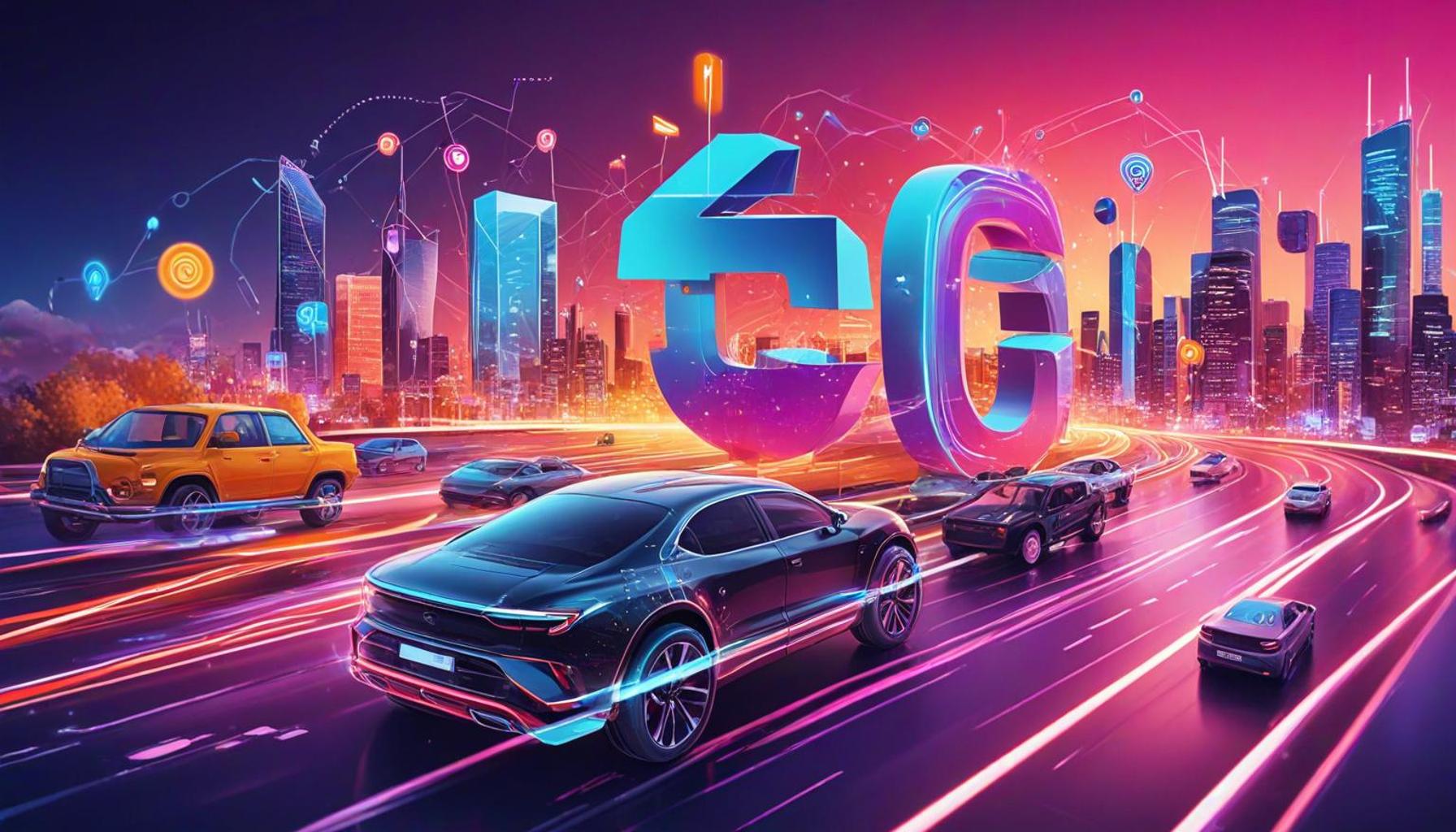
Equally important is the low latency that 5G provides. This feature allows for nearly instantaneous communication, which is crucial for technologies such as autonomous vehicles and smart city infrastructure. Consider a scenario where self-driving cars need to communicate with traffic signals and other vehicles. With 5G, these vehicles can react nearly instantaneously to changing traffic conditions, improving safety and efficiency on the roads.
Moreover, massive connectivity is another critical aspect of 5G that supports the growth of the Internet of Things (IoT). The ability to connect millions of devices simultaneously within a small area paves the way for innovative solutions in various sectors. For example, smart homes equipped with 5G technology can control lighting, heating, and security systems collaboratively and efficiently. This level of connectivity enables a better quality of life and improves overall energy management.
The practical applications of 5G are vast and transformative.
- Healthcare: In the medical field, hospitals are leveraging 5G to facilitate remote surgeries, enabling specialists to operate on patients from afar with precision and care. This can be particularly beneficial in rural areas where access to specialized medical professionals is limited.
- Entertainment: In the entertainment industry, companies like Netflix and Hulu are utilizing 5G to enhance video streaming quality and provide users with more immersive experiences without lag or interruption.
- Transportation: The logistics sector is benefiting as well, with 5G enabling real-time tracking of delivery vehicles, improving supply chain efficiency, and ensuring that companies can keep customers informed about their orders.
As we navigate this new landscape defined by 5G technology, it becomes imperative for businesses to understand and harness its potential. Staying ahead of the curve in this rapidly evolving environment involves not only adopting new technologies but also rethinking business models and strategies in light of these advancements. Organizations that embrace 5G and its capabilities can improve operations, create innovative products and enhance customer engagement, positioning themselves favorably in the competitive market.
CHECK OUT: Click here to explore more
Unlocking New Opportunities for Innovation
The advent of 5G technology is creating unprecedented opportunities for innovation across various sectors. With its powerful capabilities, businesses can expand their offerings, enhance customer experiences, and operational efficiency. The arrival of 5G is not just a technical upgrade; it fundamentally alters how businesses approach challenges and develop solutions.
One of the areas where 5G is instigating change is in data-driven decision-making. When combined with big data analytics, 5G allows companies to collect and analyze vast amounts of data at much higher speeds. For example, in retail, businesses can utilize real-time data from customer interactions and transactions to make informed decisions about inventory management, pricing strategies, and promotional campaigns. This capability can lead to not only increased sales but also enhanced customer satisfaction and loyalty.
Additionally, 5G technology empowers industries to implement Artificial Intelligence (AI) and machine learning at a scale previously unattainable. These technologies thrive on large datasets, and the low latency of 5G supports real-time processing and analysis. In manufacturing, for instance, intelligent machines equipped with AI can analyze production processes live, identify inefficiencies, and even predict maintenance needs before they become critical. This results in minimized downtime and a more streamlined production process.
The impact of 5G can also be observed in the financial services sector. With faster transaction speeds and data processing capabilities, financial institutions can enhance their offerings. Digital banks and fintech companies can offer quicker services such as loan approvals and fraud detection through real-time analytics. Furthermore, with 5G, mobile payment systems become more reliable, allowing consumers to conduct transactions seamlessly, which is particularly vital as the demand for contactless payment options grows.
Moreover, 5G opens pathways for new business models and collaborative innovations. Companies can now partner more easily with tech startups to develop groundbreaking applications, services, and products that cater to evolving consumer demands. The gaming industry exemplifies this shift, where cloud gaming platforms can leverage 5G to offer high-quality gaming experiences without the need for powerful hardware at home. As a result, access to gaming becomes democratized, attracting a broader audience and fostering new revenue streams.
- Smart Cities: Cities can leverage 5G to improve traffic management, reduce energy consumption, and increase safety through connected infrastructure. For instance, smart traffic signals can adapt in real time based on vehicle flow, significantly reducing congestion.
- Autonomous Systems: Industries focusing on delivery and logistics are utilizing 5G to enhance the functionality of drones and autonomous vehicles, making them more effective in navigating urban environments.
- Augmented Reality (AR) and Virtual Reality (VR): Businesses in education and training are using AR and VR applications powered by 5G to provide immersive experiences that facilitate learning and skill development.
In summary, the role of 5G technology in driving market innovation extends far beyond mere connectivity. It empowers businesses to rethink their operations, enhance customer interactions, and foster a culture of continuous improvement. As companies adapt to this technological shift, those who prioritize leveraging 5G will be best positioned to lead their respective industries into the future.
SEE ALSO: Click here to read another article
Transforming Communication and Connectivity
The transformative power of 5G technology extends beyond its ability to deliver faster data speeds; it redefines communication and connectivity across industries. One significant area of impact is in the realm of telehealth. With the infrastructure that 5G provides, healthcare providers can offer remote consultations with minimal latency, making it feasible for patients in rural areas to receive quality care without the need for long-distance travel. This not only improves access to medical services but can also lead to better health outcomes through timely interventions.
Moreover, the Internet of Things (IoT) is expected to thrive in the 5G era. The ability to connect millions of devices simultaneously opens avenues for businesses to collect detailed insights on consumer behavior and operational efficiency. For instance, a smart farming project can utilize 5G-enabled sensors placed across fields to monitor soil health, machine performance, and even local weather conditions. This real-time data empowers farmers to make informed decisions that enhance crop yields while optimizing resource usage, such as water or fertilizers.
Enhanced Supply Chain Management
5G technology is also set to revolutionize supply chain management. By integrating real-time tracking systems powered by 5G, companies can monitor their products’ journey from the manufacturer to the retailer, ensuring transparency and accountability at every step. This capability enables businesses to respond quickly to disruptions, whether they are due to natural disasters, strikes, or shifts in consumer demand. As a practical example, logistics companies can use 5G to react rapidly to delays caused by weather, optimizing routes in real-time to deliver goods efficiently.
Smart Retail Experiences
The retail landscape is experiencing a significant shift as well. Businesses are harnessing 5G to create smart retail environments where the shopping experience becomes more interactive and personalized. With augmented reality apps powered by 5G, customers can visualize products in their homes before purchase or try on clothing virtually. Brands can use this technology to engage consumers more effectively, leading to higher conversion rates. Retailers like Walmart are already piloting technologies that leverage 5G to combine online and in-store shopping experiences seamlessly.
Environmental Sustainability
Lastly, there’s an emerging focus on how 5G is enabling environmental sustainability. Industries are leveraging the speed and efficiency of 5G to minimize their ecological footprint. For example, smart grids powered by 5G enable energy providers to monitor energy consumption dynamically and adjust supply accordingly, which can lead to reduced energy waste. Additionally, manufacturing companies are implementing smart environmental monitoring systems that track emissions and resource usage, allowing them to adhere to stricter regulations and corporate sustainability goals.
- Enhanced Collaboration: Remote teams can collaborate effortlessly with higher video quality and real-time data sharing, fostering innovation in product development and service delivery.
- Transportation Services: With the deployment of 5G, public transport systems can become more efficient; buses can communicate with traffic signals to minimize delays, improving commuter experiences.
- Smart Home Integrations: 5G can enable more efficient smart home technologies, allowing homeowners to control devices faster and integrate new solutions seamlessly into their daily routines.
The potential of 5G technology to drive market innovation is expansive, as it reimagines how companies interact with their customers, streamline their operations, and contribute to a more sustainable and connected world. As organizations embrace the benefits of this advanced technology, they set the stage for growth and innovation in a rapidly evolving digital economy.
SEE ALSO: Click here to read another article
Conclusion
In conclusion, 5G technology is not just a step forward in telecommunications; it is a catalyst for profound market innovation across various sectors. By enabling higher data speeds and improved connectivity, 5G fosters transformation in industries such as healthcare, agriculture, supply chain management, retail, and environmental sustainability. The capability for real-time data exchange allows businesses to make informed decisions, enhance customer experiences, and improve operational efficiencies.
For instance, in telehealth, patients can access professional medical care from their homes, thereby reducing the barriers to quality healthcare. In agriculture, intelligent IoT applications allow farmers to monitor and adapt to changing conditions in real-time, preserving resources and optimizing yields. Furthermore, 5G empowers businesses to create smart retail experiences that engage customers more dynamically, ultimately increasing satisfaction and sales.
Moreover, as companies leverage the enhanced capabilities of 5G for environmental sustainability, they contribute to a more responsible approach to resource management. This adaptability and responsiveness to market trends are essential for survival in a competitive landscape. Thus, in the ever-evolving digital economy, organizations that prioritize the integration of 5G technology into their strategies will not only stay ahead of the curve but also lead the way in shaping the future of innovation.
As we look forward, the continuous evolution of 5G technology promises to unveil even more opportunities for businesses to innovate, connect, and grow sustainably in a rapidly changing global marketplace.