Technical Analysis vs. Fundamental Analysis: Which is the Best Approach?
The Basics of Technical Analysis
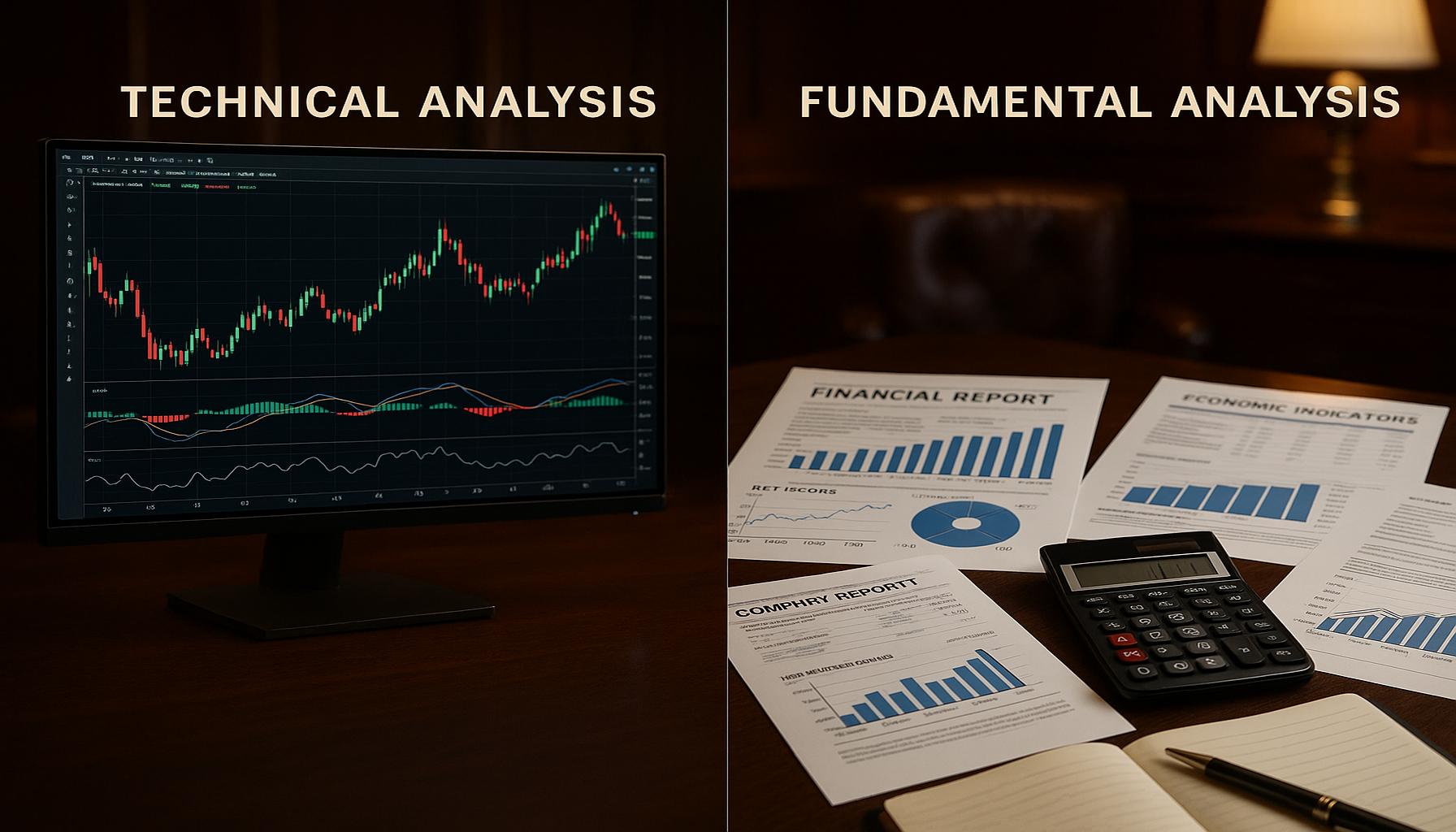
Technical analysis is a method primarily used by traders who wish to capitalize on short-term price movements in stocks. This approach relies on historical price data, helping to predict future price trends through various statistical tools. Traders often analyze stock charts, which visually represent price movements over time, allowing them to identify patterns that may suggest future behavior. For instance, if a stock demonstrates consistent upward movement, traders may decide to buy, anticipating that the trend will continue.
Several tools are integral to technical analysis. For example, Moving Averages are used to smooth out price data by creating a constantly updated average price. The Relative Strength Index (RSI) helps assess whether a stock is overbought or oversold, indicating potential reversal points. Another critical component is identifying Support and Resistance Levels, which are price points that have historically been barriers to further price movement. Understanding these concepts can significantly enhance a trader’s ability to make timely decisions.
The Fundamentals of Fundamental Analysis
In stark contrast, fundamental analysis is an approach that seeks to determine a company’s true value by examining its financial health and market environment. Investors who favor this method often focus on long-term growth, as they believe that a company’s stock price will eventually reflect its underlying value.
This analysis typically involves scrutinizing financial statements, such as earnings reports, which provide insight into a company’s profitability and growth. Evaluating a company’s market share helps investors understand its competitive position in the industry, while assessing industry conditions offers a broader context of potential growth or challenges within the market. For instance, a technology company may thrive in a booming tech sector, which can greatly enhance its prospects for future gains.
Choosing the Right Approach
Both technical and fundamental analyses present unique advantages depending on your investment goals. If you are looking to engage in short-term trading, where quick decision-making is crucial, technical analysis might be more appropriate. Conversely, if you are interested in long-term investing, focusing on a company’s fundamentals could provide a more holistic understanding of its growth potential.
In conclusion, educating yourself on these two pivotal analysis methods is important for any investor. By understanding how to apply both technical and fundamental analysis, you can strategically position yourself in the stock market and increase your chances of success. Whether you prefer the precision of charts or the depth of financial statements, blending these strategies can often yield the best results, allowing you to navigate the complexities of investing with confidence.
Diving Deeper into Technical Analysis
As we explore technical analysis further, it is crucial to understand the underlying principles and techniques that traders utilize to make informed decisions. At its core, technical analysis operates on the premise that all available information and market sentiment is already reflected in the stock price. As such, many technical analysts believe that examining price action and volume can reveal the market’s psychology.
One of the primary tools used in technical analysis is chart patterns. These patterns, such as head and shoulders, triangles, and flags, occur as prices move over time and offer signals regarding potential price direction. For example, a head and shoulders pattern often indicates a reversal from an upward trend to a downward trend. Recognizing these patterns can aid traders in timing their entry and exit points in the market.
Additionally, technical analysts commonly use indicators to complement their chart analysis. Some of the widely used indicators include:
- Bollinger Bands: These help measure market volatility and identify potential overbought or oversold conditions.
- MACD (Moving Average Convergence Divergence): This indicator highlights changes in momentum and trend direction, assisting traders in making timely decisions.
- Fibonacci Retracement levels: These are used to identify potential reversal levels based on the mathematical ratios from the Fibonacci sequence.
Trading volume is another significant aspect of technical analysis. Analyzing volume can help confirm trends or patterns indicated on the price chart. For instance, if a stock’s price increases significantly accompanied by high trading volume, it may suggest strong demand, supporting the likelihood of a continuation of that trend.
Understanding Fundamental Analysis
On the other side of the spectrum lies fundamental analysis, which appeals to those looking at the bigger picture. This method dives deep into a company’s intrinsic value, focusing on key financial metrics to determine if a stock is undervalued or overvalued. Investors utilizing fundamental analysis often consider several factors, including:
- Earnings Growth: A consistent increase in earnings is a positive indicator of a company’s financial health and future potential.
- Price-to-Earnings (P/E) Ratio: This ratio helps investors assess whether a stock is fairly valued compared to its earnings.
- Dividends: Companies that regularly pay dividends may indicate stability and profitability, making them attractive to long-term investors.
By evaluating these factors, investors can develop a clearer picture of a company’s ability to generate future profits and its overall financial wellbeing. For instance, if a technology firm reports significant earnings growth while maintaining a low P/E ratio, it may be viewed as an investment opportunity. In contrast, an investor might reconsider purchasing shares in a company with declining earnings, regardless of its current stock price.
Both technical and fundamental analysis have their merits, yielding valuable insights into the stock market landscape. Whether you find yourself drawn to the charts of technical analysis or the financial health indicators of fundamental analysis, each approach provides tools that can enhance your investment strategy.
Finding Balance: Integrating Both Approaches
While technical and fundamental analysis are often considered separate approaches, savvy investors recognize the value in integrating both methods to develop a well-rounded perspective on the market. Each analysis method addresses different aspects of investing, and using them in conjunction can enhance decision-making and improve portfolio performance.
When combining these two approaches, many investors start with fundamental analysis to identify potentially undervalued stocks. For instance, an investor looking for long-term growth may screen for companies with strong earnings reports, solid balance sheets, and favorable industry trends. Once a list of fundamentally sound companies is established, the investor can then turn to technical analysis to time their entries and exits more effectively.
For example, consider a technology company showing a strong upward trend in earnings. Upon further investigation, the investor finds that the company’s P/E ratio is below industry average, suggesting it may be undervalued. Now, instead of purchasing shares immediately, the investor could analyze the company’s stock price chart. Should they spot a bullish pattern, like a breakout above a key resistance level, it may provide the confirmation needed to take a position.
Moreover, technical indicators can help in assessing market sentiment around fundamentally sound stocks. An investor may discover that a fundamentally strong company is experiencing a temporary dip in price due to overall market volatility. By analyzing daily trading volume and applying indicators like the **Relative Strength Index (RSI)**, which measures the speed and change of price movements, they can determine whether the dip presents a buying opportunity or a longer-term issue.
Additionally, it’s essential for investors to stay informed on macroeconomic trends, as these conditions can impact both technical and fundamental analyses. Factors such as interest rates, employment rates, and economic growth indicators can sway market sentiment. For instance, if economic data suggests that a recession may be on the horizon, even fundamentally strong companies might experience short-term price declines. A technical analysis approach could signal when to prepare for defensive strategies or even capitalize on panic selling in undervalued stocks.
Ultimately, choosing the best approach hinges on an investor’s trading style, risk tolerance, and market objectives. Swing traders, for example, may lean heavily on technical analysis, as they prioritize quick trades based on short-term price movements. In contrast, long-term investors might find foundational value in fundamental analysis, seeking stable companies with strong growth potential. The key is understanding that these methods can complement each other and provide a more comprehensive trading strategy.
As one delves deeper into the world of investing, recognizing that no single approach is superior can empower investors. The dynamic nature of the stock market means that different situations may call for varying strategies. By appreciating and incorporating elements from both technical and fundamental analysis, investors can better navigate the challenges of the market and strive for more informed decision-making.
Final Thoughts: A Holistic Investment Strategy
In the ongoing debate of technical analysis versus fundamental analysis, it becomes clear that neither approach holds a monopoly on success. Each method brings its own strengths and insights, addressing unique aspects of the financial markets. Technical analysis excels in tracking market trends and price movements, enabling investors to make timely trading decisions. Conversely, fundamental analysis provides a deeper understanding of a company’s intrinsic value, focusing on long-term growth potential and economic health.
As we conclude, it’s essential for investors to recognize the value in adopting a more holistic approach. By integrating both techniques, one can gain a comprehensive view of the investment landscape. For example, while you may identify a fundamentally sound stock, employing technical analysis can help you pinpoint the most advantageous time to enter or exit that position. This strategy may not only minimize risks but also capitalize on market opportunities.
Ultimately, the best approach depends on individual trading styles, risk appetites, and specific investment goals. Whether you lean towards short-term gains or a long-term investment strategy, embracing elements from both analytical frameworks may enhance your decision-making process. By doing so, you position yourself to navigate the complexities of the market with greater confidence.
In the ever-evolving world of investing, the best path forward is one that embraces adaptability, informed judgments, and a willingness to learn. Striving to balance technical and fundamental analyses may very well be the key to advancing your investment journey and achieving lasting success in the financial markets.