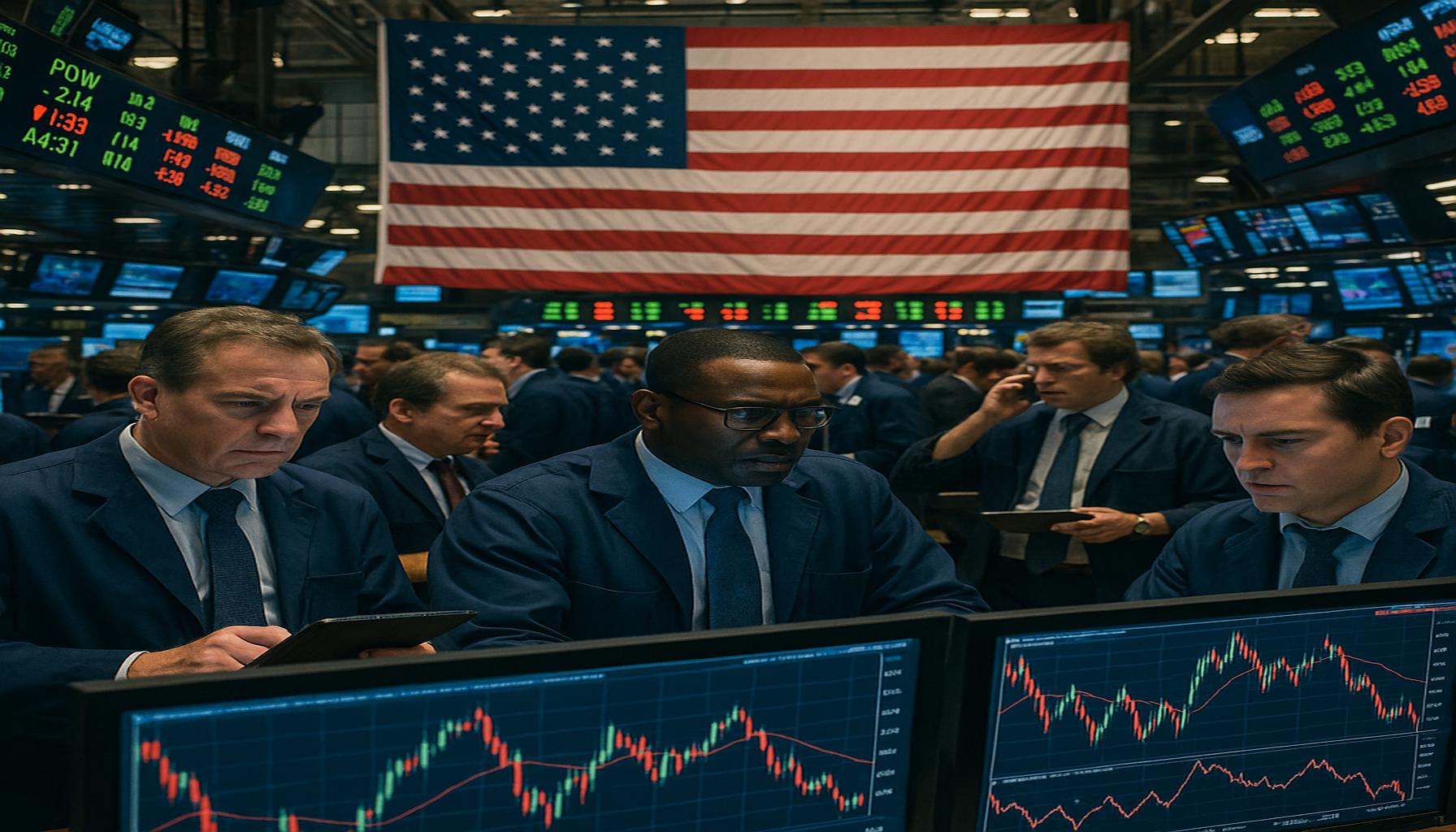
How Technological Advancement is Transforming the Stock Market

The Transformative Landscape of the Stock Market
The stock market is undergoing an unprecedented transformation, driven by rapid technological advancements. This evolution is radically reshaping how trading occurs, enhancing market accessibility, and improving investment strategies. Traditional methods of investing and trading have been significantly disrupted, providing both opportunities and challenges for investors.
Key features of this transformation include:
- High-Frequency Trading (HFT): HFT refers to the use of sophisticated algorithms to execute thousands of trades in fractions of a second. This not only increases market liquidity, allowing for quicker execution of trades but also narrows bid-ask spreads, effectively reducing transaction costs for investors. For example, firms such as Citadel Securities and Virtu Financial have become prominent players in this realm, often accounting for a significant portion of daily trading volume.
- Blockchain Technology: The integration of blockchain technology into the stock market enhances security and transparency of transactions. By creating a decentralized ledger of transactions, blockchain mitigates risks such as fraud and data manipulation, assuring investors of the integrity of their trades. Companies like Overstock.com are already leveraging blockchain for trading, offering their own stock on a blockchain-based exchange.
- Robo-Advisors: These automated, algorithm-driven financial planning services have revolutionized investment management by offering personalized portfolio construction with minimal human intervention. Platforms like Betterment and Wealthfront provide tailored investment strategies based on individual risk profiles, significantly lowering the barrier for entry into the investment world for novice investors.
- Data Analytics: The application of big data analytics allows investors to make informed decisions based on real-time market trends and historical data. Companies are utilizing machine learning algorithms to predict price movements and optimize trading strategies, granting savvy investors a competitive edge. For instance, hedge funds like Two Sigma and Renaissance Technologies employ advanced data analytics to drive their trading strategies.
- Mobile Trading Apps: The rise of mobile trading platforms, such as Robinhood and E*TRADE, enables investors to trade anytime and anywhere directly from their smartphones. This advancement has democratized investing, making it accessible to millennials and first-time investors who prefer user-friendly interfaces and low-cost trading options.
These innovations expedite trading processes and democratize investment opportunities for the average investor. Furthermore, as technology continues to advance, the implications for market efficiency, regulatory frameworks, and investor behavior become increasingly significant.
Understanding these changes is crucial for both current and prospective investors navigating the modern financial landscape. The importance of staying informed on these technological advancements cannot be overstated, as they will continue to shape the future of investing and trading practices. In this article, we will explore how these technological changes are reshaping the stock market and analyze the potential impacts on future investing trends, ensuring that investors can make educated decisions in this evolving environment.
CHECK OUT: Click here to explore more
Embracing Innovation: The New Paradigm of Trading
As technology continues to penetrate various sectors, the stock market stands at the forefront of this transformation, embracing innovations that redefine traditional trading practices. The integration of cutting-edge technologies has not only made markets more efficient but also encouraged a broader demographic of investors to participate in the financial markets. In this section, we will delve deeper into some key technological advancements and their implications for both individual and institutional investors.
High-Frequency Trading (HFT) has emerged as a game-changer in stock market operations. By utilizing complex algorithms that analyze market data at lightning speed, HFT allows firms to capitalize on small price discrepancies across different exchanges. This practice leads to increased market liquidity, which is beneficial for all traders seeking to execute large orders without significantly impacting stock prices. In fact, HFT accounts for approximately 50-70% of all trading volume in the United States, showcasing its dominance and influence on market dynamics. However, this technology has its critics, as concerns regarding market fairness and the potential for flash crashes have sparked ongoing debates among policymakers and regulatory bodies.
Blockchain technology is reshaping how transactions are validated and recorded in the stock market. Its decentralized nature fosters enhanced security and transparency, essential attributes in a landscape where cyber threats are prevalent. For instance, by implementing blockchain, companies can ensure that every transaction is securely logged, reducing the chances of fraud and discrepancies. The launch of blockchain-based equities trading platforms signifies a shift towards more secure and efficient trading environments. Notable entities like Nasdaq and the Australian Securities Exchange are currently exploring such technologies for clearing and settlement processes, which could potentially revolutionize the way trades are finalized in the not-so-distant future.
The rise of robo-advisors is another critical aspect of this technological evolution. These automated platforms utilize algorithms to manage investment portfolios based on individual risk tolerance and financial goals. By offering low-cost, automated investment solutions, firms such as Betterment and Wealthfront are making wealth management accessible to a wider audience, including millennials and first-time investors. The appeal of robo-advisors lies in their streamlined approach and low minimum investment requirements, allowing individuals with limited capital to build diversified portfolios—traditionally an option reserved for wealthier investors.
Moreover, the role of data analytics in the stock market has gained significant traction. Investors are increasingly leveraging big data to analyze market trends, investor behavior, and economic indicators. The advent of machine learning algorithms allows for the processing of vast amounts of information to derive actionable insights. For example, hedge funds such as Two Sigma utilize advanced data analytics to inform their strategies, allowing them to make decisions based on predictive modeling rather than relying on traditional financial analysis alone.
Finally, the proliferation of mobile trading apps has revolutionized how investors engage with the stock market. Platforms like Robinhood and E*TRADE have democratized investment access, permitting users to trade at their convenience, often with lower fees compared to traditional brokerage services. This change has empowered younger generations and tech-savvy individuals, reshaping their perceptions of trading as an everyday activity rather than a privilege reserved for the affluent.
In summary, the infusion of technology in the stock market has catalyzed profound changes in trading mechanisms and investor participation. These advancements not only enhance transactional efficiency but also foster inclusivity, enabling a broader array of participants to engage in the financial arena. As this trend continues, investors must adapt to the evolving landscape to make informed decisions in a rapidly changing market environment.
CHECK OUT: Click here to explore more
Artificial Intelligence: The New Analyst
In recent years, the integration of artificial intelligence (AI) in stock market analyses has become increasingly prevalent, fundamentally altering how investors assess potential stock investments. AI technologies, particularly natural language processing and predictive analytics, are being harnessed to distill vast volumes of unstructured data from various sources, ranging from news articles to financial reports. By analyzing this data almost instantaneously, AI tools can identify trends and sentiment that human analysts might overlook, providing investors with a competitive edge.
For instance, companies like Sentifi leverage AI to monitor social media and news outlets for real-time sentiment analysis on stocks. By capturing fluctuations in public sentiment, investors can gauge market movements more accurately and adjust their strategies accordingly. This application of AI exemplifies how technology enables investors to respond to real-time developments, enhancing their decision-making processes significantly.
Algorithmic Trading: Efficiency and Speed
Algorithmic trading employs mathematical models to execute orders at optimal prices, incorporating parameters such as timing, price, and volume. These algorithms can analyze multiple market conditions simultaneously, executing trades within milliseconds—far quicker than any human trader could manage. As of 2023, studies show that algorithmic trading now accounts for approximately 75% of all equity trading volume in the U.S. markets.
Moreover, this technology eliminates much of the emotional bias that can impede human decision-making. By relying on data-driven algorithms, skilled traders can enforce strategic rules consistently without succumbing to panic or euphoria. Algorithmic strategies, therefore, facilitate a more disciplined trading approach, which is particularly crucial in highly volatile markets.
The Impact of Social Trading Platforms
The advent of social trading platforms, such as eToro and CopyTrader, has created a unique environment where investors can observe and replicate the trading strategies of successful traders. These platforms encourage collaboration and knowledge sharing among users, democratizing access to trading strategies that were traditionally only available to institutional investors.
By allowing users to emulate trades made by seasoned professionals, social trading platforms lowers the barrier to entry for novice investors. This concept not only builds a community of informed traders but also enhances overall market participation, driving healthier market dynamics. According to market reports, social trading platforms have seen user growth rates increase by over 200% year-on-year, demonstrating their appeal and effectiveness in engaging everyday investors.
The Rise of Augmented Reality (AR) and Virtual Reality (VR) in Trading
An emerging trend within the stock market is the use of augmented reality (AR) and virtual reality (VR) technologies. These mediums offer immersive experiences for traders, allowing them to visualize complex data, trends, and performance metrics in innovative ways. Companies are experimenting with virtual trading floors, enabling remote participants to interact as if they were physically present. This capability not only enhances collaboration among traders but also supports more engaging and interactive trading environments.
As these technologies continue to evolve, their potential applications within the stock market will likely expand further. The combination of AR and VR with sophisticated data analytics could pave the way for a new era of trading experiences, influencing how individuals engage with the market.
As we observe these technological advancements, it is evident that the stock market is in a state of continuous evolution, driven by innovative solutions that enhance trading efficiencies, improve access, and foster collaboration among participants. The dynamic changes brought about by AI, algorithmic trading, social platforms, and AR/VR technologies mark a significant progression toward a more modern and inclusive trading landscape.
CHECK OUT: Click here to explore more
Conclusion
In summary, the ongoing technological advancements in the stock market are not merely enhancing trading processes; they are reshaping the entire investment landscape. The integration of artificial intelligence is revolutionizing how market data is analyzed and interpreted, allowing investors to leverage real-time insights that were previously unattainable. Similarly, algorithmic trading has significantly increased efficiency, enabling rapid execution of trades while minimizing emotional biases that can impact human traders’ performance.
Furthermore, the rise of social trading platforms is democratizing investing by making expert strategies accessible to retail investors, fostering community engagement that improves overall market literacy. Coupled with immersive augmented reality and virtual reality technologies, the stock market is evolving into a more interactive and collaborative environment. This transformation not only enhances the experience for seasoned traders but also encourages participation from newcomers, potentially leading to more robust market dynamics.
As these trends continue to develop, the implications for investors are profound. Embracing technology will be vital for those wishing to remain competitive in an increasingly complex market. Adapting to these advancements not only opens new avenues for trading success but also underscores the importance of continuous learning and agility in investment strategies. Ultimately, the intersection of technology and finance is paving the way for a future where the stock market is more efficient, accessible, and data-driven than ever before.