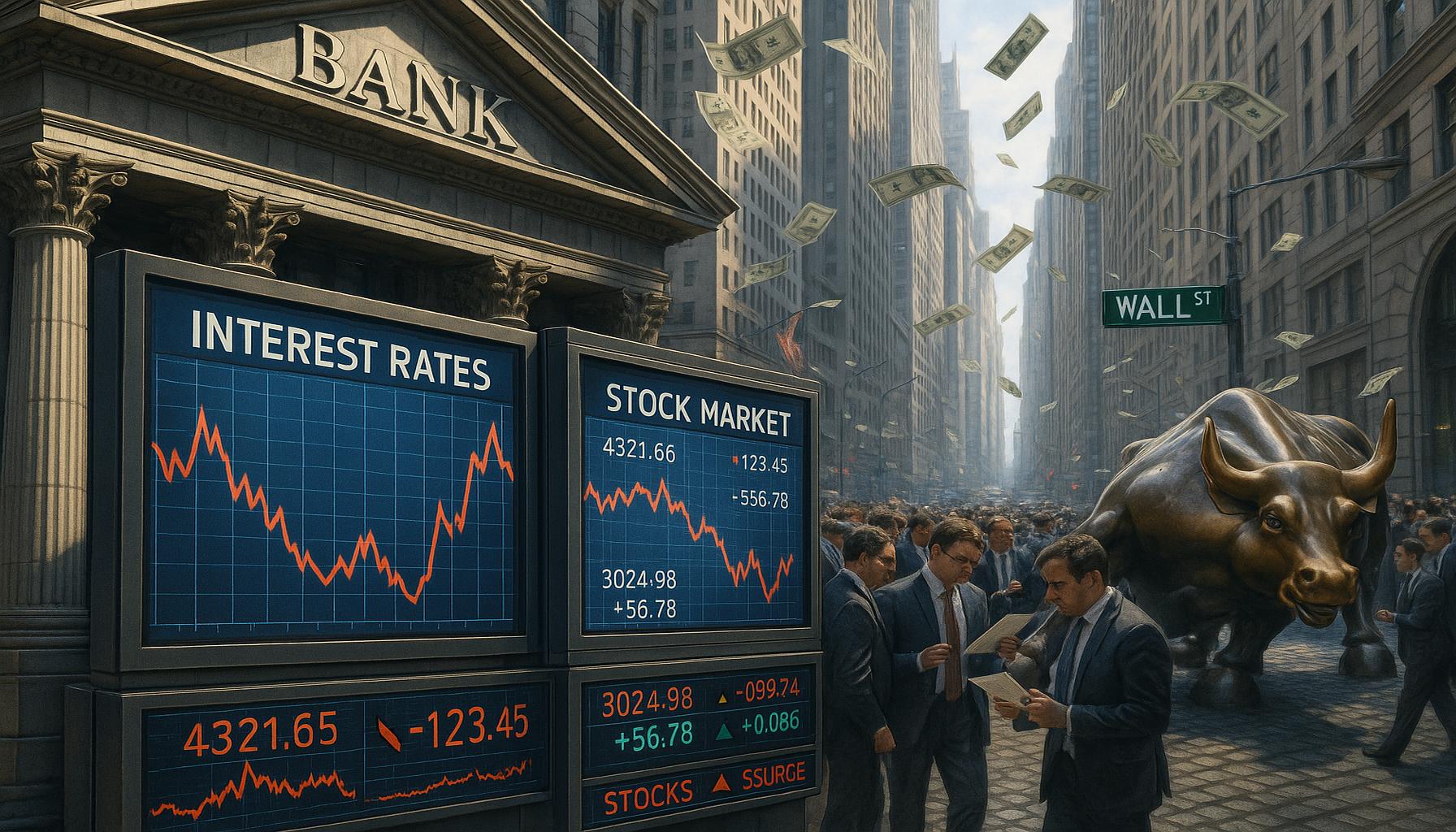
How Changes in the Financial Market Affect American Investors

Understanding the Impact of Financial Market Changes
The financial market is a dynamic environment that serves as a pivotal platform for buying and selling assets, including stocks, bonds, and commodities. For American investors, the fluctuations within these markets can be particularly influential, shaping not only individual investment strategies but also broader economic outcomes. The complexity of market interactions means that investors must be astute in analyzing trends and making sound decisions based on a variety of influencing factors.
One of the primary considerations for investors is Market Volatility. This term refers to the rapid and often unpredictable changes in the prices of securities within the market. For example, during periods of high volatility, like the onset of the COVID-19 pandemic, stock prices can plummet dramatically within days or even hours. Such conditions may compel investors to reassess their asset allocation, pursuing a more conservative approach or taking advantage of discounted prices to buy undervalued stocks.
Economic Indicators serve as essential tools for investors to gauge the health and direction of the economy. Key reports, such as unemployment rates, inflation numbers, and Gross Domestic Product (GDP) growth rates, can signal market trends that directly impact investment performance. For instance, a rising unemployment rate may indicate a sluggish economy, prompting investors to adjust their portfolios toward defensive stocks that can weather economic downturns, such as utilities or consumer staples.
Another significant factor is Interest Rates. When the Federal Reserve adjusts interest rates, it has a profound effect on various aspects of the economy. Lower interest rates typically decrease borrowing costs, encouraging businesses to expand and consumers to spend. Conversely, higher interest rates can dampen economic growth, leading investors to seek safer investments, such as bonds. For example, in recent years, the Federal Reserve has navigated interest rate changes to manage inflation, significantly impacting stock market dynamics.
The interplay of these factors contributes to a complex landscape that requires investors to navigate with care. The performance of different asset classes presents a reflection of market changes, with shifts in investor sentiment often impacting the holistic view of the market’s trajectory. For instance, during a bull market, stocks typically outperform bonds, whereas during bearish trends, safe havens like gold may see increased demand.
To be successful in this evolving financial landscape, American investors must remain vigilant and well-informed. By understanding the implications of market changes, they can better mitigate risks associated with investment volatility while positioning themselves to seize potential opportunities. Continuous education and adherence to sound investment principles are essential for sustaining and growing wealth in such an unpredictable environment.
CHECK OUT: Click here to explore more
Market Volatility and Investor Reaction
Market volatility is often viewed as a double-edged sword, presenting both risks and opportunities for American investors. During periods of pronounced volatility, investor behavior can shift dramatically. Understanding how to respond to these fluctuations is crucial for maintaining a robust investment portfolio. Key strategies that investors might consider during volatile periods include:
- Rebalancing Portfolios: Investors often reassess their asset allocation to ensure their portfolios align with their risk tolerance and long-term financial goals. The decline in stock prices may lead investors to purchase undervalued shares, while an increase might prompt a shift towards safer assets.
- Utilizing Stop-Loss Orders: Many investors implement stop-loss orders to limit potential losses during severe market downturns. This strategy can help in safeguarding capital and preserving investment integrity.
- Diversification: A well-diversified portfolio can mitigate the impact of volatility. Investors may seek to spread their investments across various asset classes, such as equities, fixed income, and real estate, to reduce exposure to any single market downturn.
In addition to volatility, investor sentiment plays a critical role in how markets function. Often influenced by news, political events, or economic reports, investor emotions can lead to herd behavior—where investors collectively make decisions based on prevailing trends rather than fundamental analysis. For instance, during the onset of the COVID-19 pandemic, fear and uncertainty drove a significant sell-off in major stock indices, highlighting how rapidly emotions can translate into market movements.
Moreover, economic indicators have a persistent influence on investor strategies. For American investors, benchmarking their portfolios against indicators such as the S&P 500, the Dow Jones Industrial Average, and other financial metrics allows for informed decision-making. These indicators provide insights into market performance and can help investors gauge the timing of buying or selling assets.
The Importance of Market Research
Staying informed about market trends is essential for American investors seeking to navigate the complexities of financial market changes. Conducting thorough research can unveil critical insights into market timing and asset performance. Investors should focus on:
- Analyzing Historical Data: Reviewing past market performance under similar economic conditions can offer guidance on likely future outcomes.
- Monitoring Expert Analysis: Subscription to financial news services or following market analysts can provide valuable perspectives on market movements.
- Understanding Emerging Trends: Investors should keep an eye on technological advancements, shifting consumer preferences, and regulatory changes that can impact specific sectors.
In conclusion, the interplay of market volatility, investor sentiment, and economic indicators necessitates that American investors remain proactive and informed. By employing appropriate strategies and continually monitoring market conditions, investors can more effectively navigate the uncertainties inherent in the financial landscape.
CHECK OUT: Click here to explore more
The Role of Interest Rates in Investment Decisions
Interest rates are a pivotal factor influencing American investors’ strategies and behavior in the financial market. The decisions made by the Federal Reserve regarding interest rates can have widespread implications, creating ripples through multiple asset classes. When the Fed raises interest rates, borrowing costs increase, which can lead to a slowdown in economic activity and decrease consumer spending. Consequently, this environment tends to create a defensive stance among investors who may seek to minimize exposure to riskier assets.
Conversely, when interest rates are lowered, borrowing becomes more affordable, encouraging spending and investment. In such an environment, equity markets often experience upward momentum as businesses expand operations and consumers increase purchasing. Therefore, investors are likely to reallocate their portfolios to capitalize on growth opportunities. Furthermore, sectors that typically thrive during low-interest rate periods, such as real estate and consumer discretionary, may see increased investment activity.
Fiscal Policy and Its Impact on Market Sentiment
Beyond interest rates, fiscal policy decisions at both the federal and state levels significantly impact investor sentiment. Measures such as tax reforms, government spending programs, or stimulus packages can create distinct opportunities or risks in various sectors. For instance, the recent economic stimulus packages introduced in response to the COVID-19 pandemic were designed to support economic recovery, impacting everything from consumer confidence to stock market performance.
A well-structured fiscal policy can lead to enhanced investor confidence, which often results in higher market valuations. Investors frequently assess these policies through the lens of long-term economic growth potential, leading to sector rotation based on anticipated benefits. For example, infrastructure spending initiatives typically encourage investments in construction-related equities, while technology firms may see substantial growth if the fiscal outlook favors innovation and research.
The Influence of Global Events on U.S. Markets
American investors must also navigate the realities of a globally interconnected market. Events occurring outside the United States—such as geopolitical tensions, international trade agreements, or economic changes in major markets like China or Europe—can lead to immediate fluctuations in U.S. market prices. The integration of global markets means that American investors must remain aware of international news and trends that potentially affect domestic performance.
For instance, a trade dispute may lead to volatility in related sectors, prompting American investors to adjust their strategies for industries heavily reliant on imports or exports. Currency fluctuations can also affect multinational corporations and impact the earnings reported in USD terms, influencing investor sentiment and action. Thus, maintaining an awareness of global macroeconomic factors becomes essential for formulating a sound investment approach.
Technological Advances and Their Disruptive Impact
The rapid development of technology continues to reshape the landscape of investing, creating both challenges and opportunities for American investors. As digital trading platforms proliferate and access to real-time data improves, investors are empowered to make informed decisions more rapidly than ever before. However, this swift access to information can also lead to rash decision-making driven by emotions or social media trends.
The rise of algorithmic trading and robo-advisors introduces a new dynamic into the market, influencing price movements and liquidity. Investors must remain cognizant of these technological advancements and adjust their strategies accordingly. Understanding how technology affects market behaviors, alongside adopting potentially innovative investment vehicles—including exchange-traded funds (ETFs) focused on technology or sustainability—allows investors to stay competitive in an evolving landscape.
Cumulatively, these elements—interest rates, fiscal policy decisions, global events, and technological changes—interact to shape American investors’ responses to market changes. As they adjust their strategies in response to these ongoing developments, maintaining a balanced perspective rooted in research and analysis will be critical to achieving long-term financial objectives.
CHECK OUT: Click here to explore more
Conclusion
In conclusion, the dynamics of the financial market profoundly influence the behavior and decision-making processes of American investors. The shifting landscape, driven by factors such as interest rates, fiscal policies, global events, and technological advancements, requires investors to remain vigilant and adaptable. For instance, when the Federal Reserve raises interest rates to combat inflation, the immediate effect can lead to higher borrowing costs for consumers and businesses alike. This often results in decreased spending and, potentially, lower stock market performance, thus necessitating a recalibration of portfolio strategies wherein investors may shift their focus from growth stocks to value stocks or bonds that tend to perform better under such conditions.
Moreover, fiscal policy changes, particularly during times of economic stimulus or reform, can bolster market sentiment and sector performance. For example, the implementation of infrastructure spending can create investment opportunities within the construction and manufacturing sectors, ultimately shaping the path of growth for various industries. Such shifts underscore the necessity for investors to maintain a dynamic approach and be amenable to reassessing their strategies regularly.
American investors must also consider the impact of international events on domestic markets, recognizing that global interdependencies can lead to both risks and opportunities. For instance, geopolitical tensions or global supply chain disruptions can significantly affect commodity prices, impacting industries from energy to agriculture. The ability to navigate these complexities is further complicated by rapid technological advancements. Innovations such as algorithmic trading and robo-advisory services have transformed trading practices and market access, enabling even retail investors to make informed decisions swiftly and effectively.
As we move forward, staying informed and employing a strategic, research-driven approach is essential for American investors. By understanding the multifaceted nature of financial market changes and their potential implications, investors can effectively position themselves to achieve their long-term financial goals. Ultimately, the capacity to adapt to evolving market conditions—understanding not only the economic indicators but also the technological trends—will distinguish successful investors from others in today’s fast-paced financial environment. As such, continuous education and strategic planning should be at the forefront of any investment strategy.